 Call us now

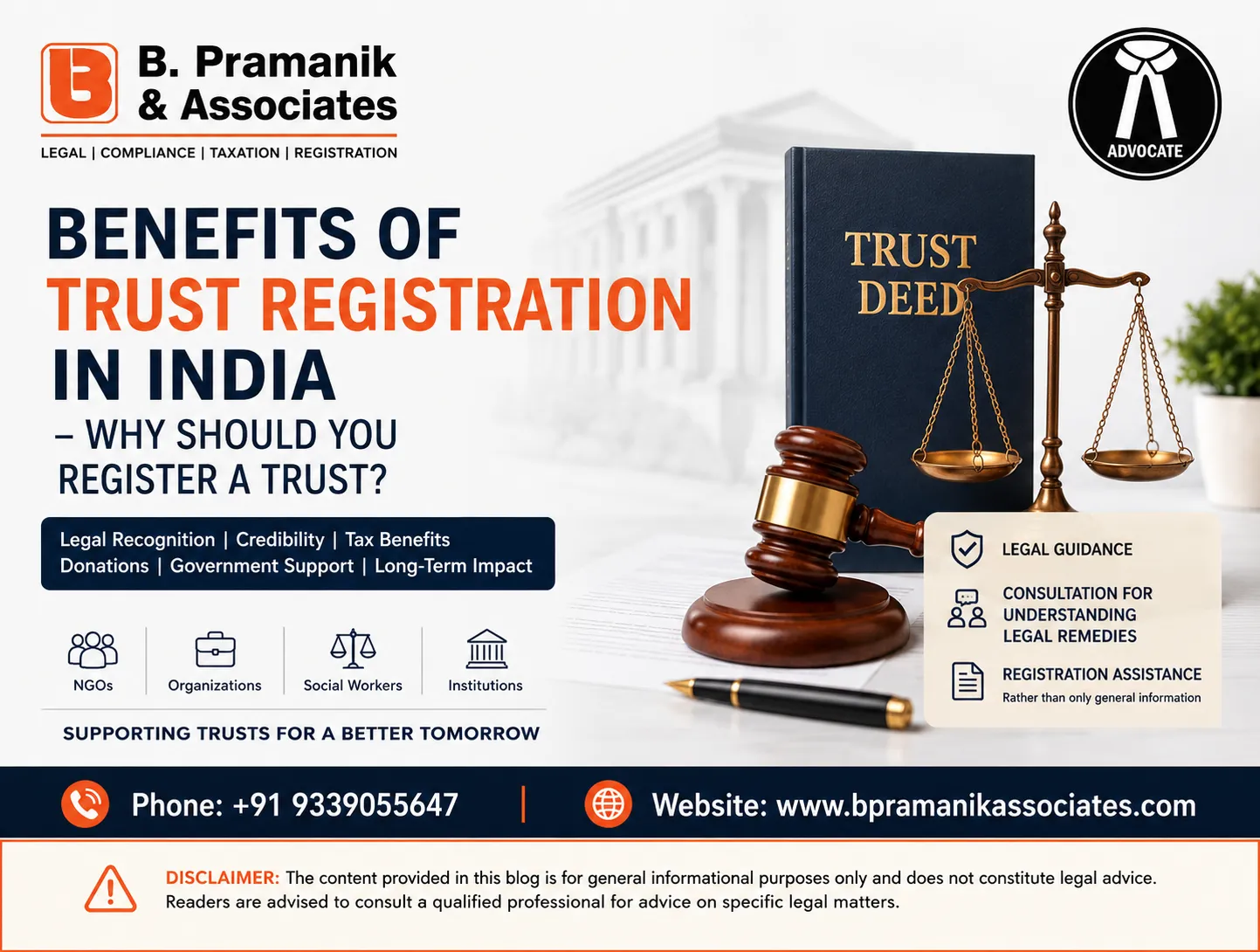
Benefits of Trust Registration in India – Why Should You Register a Trust?

Introduction: Understanding the Importance of Trust Registration in India
A trust is one of the commonly used legal structures in India for carrying out charitable activities, social welfare projects, educational initiatives, religious activities, and other public-benefit purposes. Many individuals and groups establish trusts with the intention of contributing positively to society. However, simply creating a trust deed and starting activities may not always provide the legal clarity and recognition required for long-term operations.
This is where Trust Registration Benefits in India become important. Registration provides a formal legal identity to the trust and helps maintain transparency, accountability, and proper documentation of its activities.
Many people think that creating a trust is only about preparing documents and submitting forms. In reality, trust registration involves understanding legal requirements, preparing accurate documentation, selecting appropriate objectives, and following applicable procedures. A small mistake in the beginning can create unnecessary complications later — just like forgetting an umbrella during the rainy season and then negotiating with the clouds!
For individuals, NGOs, and social organizations, proper legal guidance and consultation for understanding legal remedies can help them make informed decisions regarding trust formation and registration.
What Are the Benefits of Trust Registration in India?
The Benefits of Trust Registration in India include legal recognition, improved credibility, better management structure, and opportunities to comply with various statutory requirements. A registered trust operates with a documented legal framework that defines its objectives, trustees’ responsibilities, and operational guidelines.
Let us understand the major advantages in detail.
1. Legal Recognition and Separate Identity of the Trust
One of the primary Legal Benefits of Trust Registration is that it provides a structured legal identity to the organization.
A registered trust has a properly documented existence through its trust deed and registration records. This helps establish clarity regarding:
- Name and objectives of the trust
- Roles and responsibilities of trustees
- Rules for managing trust activities
- Purpose for which the trust has been created
Legal recognition helps avoid confusion among trustees, beneficiaries, donors, and other stakeholders.
For social organizations, having a registered structure creates better administrative discipline. A trust without proper documentation may face difficulties while proving its objectives and operational authority.
2. Builds Credibility Among Donors and Beneficiaries
What benefits does a registered trust get in India?
A registered trust generally enjoys greater credibility because its activities and structure are supported by formal documentation.
Donors and supporters often prefer organizations that maintain transparency regarding:
- Trust objectives
- Trustee details
- Financial records
- Utilization of funds
- Compliance responsibilities
Registration does not automatically guarantee funding or donations, but it helps create a transparent framework where donors can understand the organization’s legal status.
For charitable organizations, trust registration works like an identity card. Without it, explaining “Yes, we are genuine” can become a long conversation. Proper documents usually make communication easier.
3. Helps in Carrying Out Charitable and Social Activities
What are the advantages of charitable trust registration?
Charitable trusts are established for activities such as:
- Education support
- Healthcare initiatives
- Poverty relief programs
- Social welfare activities
- Community development projects
- Other charitable purposes
Charitable Trust Registration Benefits include maintaining an organized legal structure for carrying out these activities.
A registered trust can clearly define its charitable objectives and operate according to the rules mentioned in its trust deed.
Proper registration also helps trustees maintain accountability while managing resources collected for charitable purposes.
4. Better Opportunities for Tax-Related Compliance
Does trust registration provide tax exemption?
Many people believe that trust registration automatically provides tax exemption. However, this understanding is incomplete.
Trust registration is one part of the compliance process. Tax benefits may depend on fulfilling additional requirements under applicable tax laws, such as obtaining necessary approvals or registrations from relevant authorities.
For example, charitable organizations may explore options related to income tax benefits by following prescribed procedures.
Therefore, trustees should seek appropriate legal guidance before assuming any automatic tax advantage.
Understanding the difference between trust registration and tax compliance helps organizations avoid future legal difficulties.
5. Helps in Receiving Donations and Maintaining Transparency
How trust registration helps in receiving donations
A registered trust may find it easier to maintain donor confidence because its legal structure and objectives are formally documented.
For donation-based organizations, transparency is extremely important. Donors generally want clarity about:
- Who manages the trust?
- What activities are conducted?
- How funds are utilized?
- Whether records are properly maintained?
Registration supports systematic record-keeping and responsible administration.
However, receiving donations depends on various factors, including the trust’s activities, compliance status, reputation, and applicable legal requirements.
6. Supports Long-Term Management and Continuity
A major advantage of creating a trust is that it can continue its activities beyond the involvement of one individual.
Benefits of Creating a Trust for Long-Term Social Work
A properly structured trust can provide continuity because:
- Trustee responsibilities are documented
- Objectives are clearly mentioned
- Management procedures are established
- Future trustees can continue operations according to the trust deed
For social organizations, continuity is important because charitable work often requires years of consistent effort.
A trust should not depend only on one person’s memory or notebook. Legal documentation provides a more reliable foundation than “I told someone about it five years ago.”
7. Helps NGOs Maintain Proper Legal Compliance
Why do NGOs need trust registration?
Many NGOs choose trust structures because they require a formal framework for managing social activities.
Trust Registration for NGO helps organizations:
- Establish a recognized structure
- Maintain proper records
- Define organizational objectives
- Follow legal procedures
NGOs should understand that registration is only the beginning. Continuous compliance, record maintenance, and proper financial management are also important.
Organizations involved in public welfare activities should regularly review applicable legal requirements and obtain consultation for understanding legal remedies whenever necessary.
8. Difference Between Registered and Unregistered Trust
Benefits of registered trust compared to unregistered trust
The difference between registered and unregistered trusts mainly relates to legal documentation, recognition, and administrative clarity.
A registered trust generally provides:
| Registered Trust | Unregistered Trust |
| Formal registration documents available | Limited formal recognition |
| Clearly documented objectives | Possible ambiguity regarding objectives |
| Better transparency framework | Difficulties in proving structure |
| Easier compliance management | Greater administrative challenges |
Registration does not remove all legal responsibilities, but it provides a more organized foundation for trust activities.
9. Government Funding and Institutional Support
Can a registered trust receive government funding?
A registered trust may become eligible to apply for certain government schemes, grants, or institutional support depending on specific eligibility criteria.
Registration alone does not guarantee approval of funding applications.
Authorities may consider various factors, including:
- Nature of activities
- Compliance records
- Financial transparency
- Applicable scheme requirements
Therefore, organizations should carefully review the conditions of each funding opportunity.
Trust Registration Process in India: Basic Overview
How to Register a Trust in India?
The general process of trust registration involves:
1. Preparing the Trust Deed
The trust deed is a key document that mentions:
- Name of the trust
- Objectives
- Trustee details
- Rules of management
- Beneficiary-related information
2. Collecting Required Documents
Documents Required for Trust Registration
Common documents may include:
- Identity proof of trustees
- Address proof
- Photographs
- Trust deed
- Property-related documents (where applicable)
- Other documents required by the registration authority
3. Submission Before Appropriate Authority
The trust deed and required documents are submitted before the relevant authority according to applicable procedures.
4. Maintaining Compliance After Registration
After registration, trustees should maintain proper records and follow applicable legal requirements.
Trust Registration in Kolkata and West Bengal: Understanding Local Requirements
Individuals searching for Trust Registration Kolkata or Trust Registration Consultant Kolkata should understand that procedures may vary depending on applicable state rules and administrative requirements.
A trust registration process generally requires careful preparation of documents and understanding of legal procedures.
For individuals and organizations seeking registration assistance rather than only general information, professional consultation can help them understand documentation requirements, procedural steps, and possible legal solutions.
Conclusion: Making an Informed Decision About Trust Registration
Establishing a trust is an important step for individuals and organizations working toward charitable, educational, religious, or social objectives. Understanding the Benefits of Trust Registration in India helps trustees create a transparent and legally structured foundation for their activities.
Trust registration provides advantages such as legal recognition, improved credibility, better administrative management, and support for compliance requirements. However, registration should always be followed by responsible management, accurate record maintenance, and adherence to applicable laws.
Before creating or registering a trust, individuals should consider legal guidance and consultation for understanding legal remedies, documentation requirements, and compliance responsibilities. A properly structured trust not only supports present activities but also creates a stronger foundation for future social initiatives.
B Pramanik & Associates – Kolkata
B Pramanik & Associates provides structured assistance in legal, compliance, taxation, registration, licensing, and business documentation matters for clients across India.
Based in Kolkata, West Bengal, B Pramanik & Associates provides professional support in trust registration, NGO compliance, legal documentation, taxation matters, business registrations, licensing requirements, and related advisory services for individuals, charitable organizations, NGOs, startups, businesses, and institutions across India.
When establishing a trust, proper documentation, understanding of legal procedures, and compliance planning are important steps for creating a legally structured organization. B Pramanik & Associates provides guidance related to trust registration procedures, documentation requirements, compliance considerations, and legal processes to help clients understand applicable requirements.
For professional consultation, documentation support, and compliance assistance regarding Trust Registration in Kolkata, charitable trust registration, NGO-related legal matters, and other legal requirements, you may contact B Pramanik & Associates at:
Phone: +91 9339055647 via call or WhatsApp
Website: www.bpramanikassociates.com
B Pramanik & Associates follows a professional and process-oriented approach while assisting clients with legal documentation, registration procedures, compliance requirements, taxation matters, licensing, property-related legal support, and business advisory services.
Trust Registration Assistance Across India
Whether you are planning to establish a charitable trust, NGO, social organization, or require assistance regarding trust documentation and compliance, professional guidance can help you understand the registration process, required documents, legal responsibilities, and applicable procedures.
B Pramanik & Associates assists clients with understanding matters related to:
- Trust registration documentation and procedures
- Charitable trust registration requirements
- NGO compliance and legal documentation
- Registration-related consultation
- Taxation and compliance guidance
- Business and legal documentation support
- Licensing and regulatory requirements
For individuals and organizations looking for Trust Registration Consultant Kolkata or registration assistance rather than only general information, proper legal consultation can help in understanding available legal remedies, procedural requirements, and compliance responsibilities.
With structured documentation support and professional legal guidance, B Pramanik & Associates helps clients across India approach trust registration and related legal matters with better clarity and compliance awareness.
Frequently Asked Questions (FAQs)
1. What is the benefit of registering a trust?
Registration provides legal recognition, better documentation, transparency, and a structured framework for managing trust activities.
2. Why should you register a trust?
A registered trust helps establish clear objectives, trustee responsibilities, and proper management procedures.
3. Is trust registration beneficial for charity work?
Yes, registration can provide a formal structure for conducting charitable activities and maintaining transparency.
4. Does registered trust get tax benefits in India?
Tax benefits depend on fulfilling additional legal requirements. Trust registration alone does not automatically provide tax exemption.
5. What documents are required for trust registration?
Documents generally include trustee identity proof, address proof, trust deed, photographs, and other required documents.
6. How long does trust registration take in India?
The time required depends on document accuracy, authority procedures, and completion of required formalities.
7. What is the cost of trust registration in India?
The cost depends on factors such as documentation, government charges, and professional consultation requirements.
8. What are the legal benefits of trust registration in India?
Trust registration provides a structured legal framework by documenting the trust’s objectives, trustee responsibilities, and operational procedures. It helps maintain transparency and proper management of trust activities.
9. Can a registered trust receive donations from individuals and organizations?
Yes, a registered trust can receive donations subject to applicable legal requirements and compliance obligations. Maintaining proper records and transparency regarding fund utilization is important for building donor confidence.
10. What is the difference between a registered trust and an unregistered trust?
A registered trust has formal registration records, documented objectives, and a structured management framework. An unregistered trust may face difficulties in establishing legal documentation and administrative clarity.
11. How does trust registration help an NGO?
Trust registration helps an NGO establish a recognized legal structure, define its objectives, maintain documentation, and manage charitable or social welfare activities in an organized manner.
12. Can a trust apply for government schemes after registration?
A registered trust may apply for eligible government schemes, grants, or institutional support depending on the specific requirements of the concerned authority. Registration alone does not guarantee approval.
13. What are the objectives that can be mentioned in a trust deed?
A trust deed may include objectives related to charitable activities, education, healthcare support, social welfare, religious purposes, community development, and other legally permitted activities.
14. Is online trust registration available in India?
Certain parts of the trust registration process may involve online facilities depending on the applicable state procedures. However, document preparation and compliance requirements should be completed carefully according to legal guidelines.
15. Why is professional consultation important for trust registration?
Professional consultation helps individuals and organizations understand documentation requirements, registration procedures, compliance responsibilities, and possible legal considerations before establishing a trust.
Disclaimer:
The information provided in this blog, “Benefits of Trust Registration in India – Why Should You Register a Trust?”, is intended for general informational and educational purposes only. It does not constitute legal advice, professional opinion, or a substitute for consultation with a qualified legal professional.
Trust registration procedures, compliance requirements, tax provisions, and applicable regulations may vary depending on specific circumstances and changes in applicable laws. Readers are advised to seek proper legal guidance and consultation for understanding legal remedies, documentation requirements, and registration procedures related to their individual matters.
B Pramanik & Associates provides structured assistance in legal documentation, compliance, registration, and advisory matters. Any decision regarding trust formation, registration, or compliance should be taken after considering the relevant facts and obtaining appropriate professional consultation.